
Finding the sharpest kitchen knives can transform your cooking experience completely. Whether you prefer Japanese precision or German craftsmanship, the right blade makes every chop, slice, and dice effortless. In this guide, we explore the top-rated knives, explain what makes them so sharp, and share practical tips to keep your edges flawless for years.
Cooking should feel effortless. The right tools make all the difference, and nothing changes your kitchen game quite like the sharpest kitchen knives. A dull blade forces you to push harder, wastes food, and even increases the risk of accidents.
Whether you are a home cook or a weekend chef, investing in premium blades pays off immediately. You will notice the difference in every slice, every chop, and every mince. In this guide, we break down what makes a knife truly sharp, which brands deliver the best performance, and how to keep your edges in top shape.
We have tested and reviewed dozens of options to bring you the most honest and helpful recommendations. No fluff, no filler, just real insights that will help you choose the best tools for your kitchen.
Key Takeaways
- Japanese knives use harder steel: They hold a sharper edge longer and excel at precise cuts.
- German knives are durable and versatile: They handle heavy-duty tasks with ease and comfort.
- Edge angle matters: A 15-degree angle is sharper, while 20 degrees is more resilient.
- Regular honing keeps knives sharp: Use a honing rod before every cooking session.
- Proper maintenance extends blade life: Hand wash, store correctly, and sharpen on a whetstone.
- Rockwell hardness indicates sharpness potential: Higher numbers mean harder, sharper steel.
- The right knife for the task: Different blade types serve different cutting needs.
📑 Table of Contents
What Makes a Kitchen Knife Sharp?
Sharpness is not just about a fine edge. It involves several factors that work together to create a cutting experience that feels smooth and precise. Understanding these elements helps you make smarter buying decisions.
Edge Angle and Geometry
The angle at which a blade is sharpened determines how sharp it feels. Most Japanese knives use a 15-degree edge per side, while German knives typically sit at 20 degrees. A smaller angle creates a thinner, sharper edge that slices through food with minimal resistance.
However, thinner edges can chip more easily. This is why Japanese blades often require more careful handling. German-style knives with wider angles trade some sharpness for durability and resilience.
Steel Hardness and Composition
The type of steel used in a blade plays a huge role in how sharp and how long it stays sharp. Harder steel holds a finer edge, but it can be more brittle. Softer steel is tougher but needs more frequent sharpening.
Knife makers measure hardness using the Rockwell scale. High-end kitchen knives often score between 60 and 67 on this scale. The higher the number, the harder the steel, and the sharper the potential edge.
Blade Length and Purpose
Not all knives need to be equally sharp. A chef knife benefits from a versatile, moderately sharp edge that handles vegetables, meat, and herbs. A paring knife needs precision sharpness for delicate tasks like peeling and trimming.
A serrated knife or bread knife uses a different kind of sharpness. Its teeth grip and saw through crusty surfaces without crushing the soft interior. Understanding the purpose of each blade helps you choose the right level of sharpness for each task.
Honing vs. Sharpening
Many people confuse honing with sharpening, but they serve different purposes. Honing realigns the microscopic edge of the blade using a honing rod. Sharpening removes material to create a new edge using a whetstone or sharpener.
Honing should happen regularly, even before every use. Sharpening is needed less often, typically every few months depending on usage. Together, these practices keep your kitchen cutlery performing at its best.
Top Brands for the Sharpest Kitchen Knives
The market is full of knife brands, but only a few consistently deliver exceptional sharpness and quality. Here are the brands that our experts trust and recommend.
Shun
Shun is a name that knife lovers instantly recognize. Their knives combine Japanese craftsmanship with modern innovation. Each blade features a hard, high-carbon steel core wrapped in softer layers for strength and resilience.
Shun knives come razor-sharp from the box. The Shun Premier line is especially popular among home cooks. These knives feature a beautiful Damascus pattern and an edge angle of 16 degrees per side. They are lightweight, balanced, and incredibly precise.
Global
Global knives stand out with their sleek, seamless design. Made from a single piece of stainless steel, they offer a unique combination of sharpness and durability. The thin, lightweight blades feel almost effortless to use.
Global uses CROMOVA 18 stainless steel, which resists corrosion and holds a keen edge. Their knives are favorites among professional chefs who value both performance and aesthetics. The brand offers a wide range of knife set options for every kitchen.
Zwilling J.A. Henckels
Zwilling has been making knives since 1731. Their German-engineered blades are built to last and deliver reliable sharpness for everyday use. The Zwilling Pro series represents their premium line, featuring high-carbon stainless steel and a precision edge.
These knives have a full tang construction, meaning the blade extends through the handle for better balance and durability. They are slightly heavier than Japanese options, which many cooks prefer for heavy chopping tasks.
Wüsthof
Wüsthof is another legendary German brand known for producing exceptional kitchen cutlery. Their knives are forged from a single block of steel, ensuring strength and consistency across every blade.
The Wüsthof Classic series is their most popular line. Each knife is precision-forged and laser-tested for sharpness. With a Rockwell hardness of 56 to 58, these blades offer a good balance between sharpness and toughness.
MAC
MAC knives are a hidden gem in the world of premium kitchen blades. Made in Japan, they feature incredibly thin, lightweight blades that stay sharp for a long time. Their edge geometry allows for effortless cutting with minimal pressure.
MAC uses high-carbon stainless steel that combines hardness with resistance to staining. Their MAC Professional series is widely regarded as one of the best values among Japanese-style knives. Many chefs consider MAC their secret weapon in the kitchen.
Tojiro
Tojiro offers exceptional quality at a more accessible price point. Their DP series uses VG-10 stainless steel, a premium material known for holding a very sharp edge. Tojiro knives are popular among home cooks who want Japanese performance without the high-end price tag.
The brand focuses on traditional Japanese knife-making techniques combined with modern manufacturing. The result is a line of kitchen cutlery that is sharp, beautiful, and reliable. Tojiro is an excellent entry point for anyone exploring Japanese blades.
Japanese vs German Steel: Which Is Sharper?
The debate between Japanese and German knives is one of the most common questions among home cooks. Both styles have distinct advantages, and understanding the differences helps you choose the right blade for your cooking style.
Japanese Knives: Precision and Sharpness
Japanese knives are known for their exceptional sharpness. They use harder steel that allows for thinner, more acute edge angles. This means they cut through food with less friction and more precision.
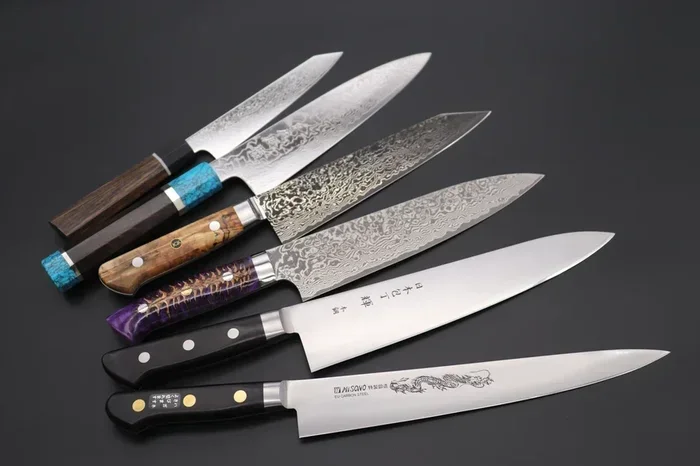
Common Japanese knife types include the gyuto (chef knife), yanagiba (slicing knife), and usuba (vegetable knife). Each is designed for specific tasks and delivers outstanding performance in its niche.
The trade-off is that Japanese steel is more brittle. These knives require careful handling. You should avoid twisting the blade, cutting on hard surfaces, or using them on bones. With proper care, Japanese knives stay sharper longer than their German counterparts.
German Knives: Durability and Versatility
German knives are built for durability and all-around use. They use softer steel that absorbs more impact without chipping. This makes them ideal for busy kitchens where knives go through a lot of wear and tear.
German knives typically have a curved blade that supports a rocking cutting motion. This style is excellent for chopping vegetables quickly and efficiently. The thicker spine adds strength, making these knives more forgiving of rough handling.
While German knives may not start out as sharp as Japanese options, they are easier to maintain. They hold up well to daily use and require less careful handling. For most home cooks, a German knife is the practical choice.
Comparison Table
| Feature | Japanese Knives | German Knives |
|---|---|---|
| Edge Angle | 15 degrees per side | 20 degrees per side |
| Steel Hardness | 60-67 HRC | 56-58 HRC |
| Sharpness | Exceptional | Very Good |
| Durability | Moderate | High |
| Weight | Light | Medium-Heavy |
| Maintenance | Requires care | Easy to maintain |
| Best For | Precision cuts, vegetables, fish | Heavy chopping, versatile tasks |
| Price Range | Mid to High | Mid to High |
The best choice depends on your cooking style. If you value precision and are willing to care for your blades carefully, Japanese knives are hard to beat. If you want a durable, versatile workhorse, German knives are the way to go.
How to Keep Your Kitchen Knives Razor Sharp
Buying the sharpest kitchen knives is only half the battle. Keeping them sharp over time requires proper care and maintenance. Follow these practices, and your blades will stay in excellent condition for years.
Use a Honing Rod Regularly
A honing rod is the simplest and most effective tool for maintaining sharpness. It realigns the microscopic edge of the blade, which shifts slightly with each use. Honing before every cooking session takes just a few seconds and makes a noticeable difference.
Hold the rod vertically and draw the blade down at a 15 to 20-degree angle. Alternate sides with each stroke. Use light pressure and smooth, steady motions. Ceramic rods are gentler on the blade, while steel rods provide more aggressive realignment.
Sharpen on a Whetstone
When honing is no longer enough, it is time to sharpen on a whetstone. Start with a coarse grit (around 1000) to reshape the edge, then finish with a fine grit (3000 to 5000) for a polished, razor-sharp finish.
Soak the stone in water for 10 to 15 minutes before use. Hold the blade at the correct angle and slide it across the stone in a sweeping motion. Repeat on both sides evenly. This method gives you the most control and produces the sharpest results.
Store Knives Properly
How you store your knives affects their sharpness. Never toss them loose into a drawer where they knock against other utensils. This damages the edge and creates nicks.
Use a knife block, a magnetic strip, or blade guards for safe storage. Each option protects the edge and keeps your kitchen organized. A magnetic strip is especially popular because it saves space and keeps blades accessible.
Use the Right Cutting Board
The surface you cut on matters more than most people realize. Hard surfaces like glass, granite, and ceramic dull blades quickly. They are the enemy of sharp kitchen knives.
Choose a wooden or plastic cutting board instead. Wood is gentle on blades and has natural antimicrobial properties. Bamboo is a sustainable alternative that also protects edges. A good cutting board is one of the simplest investments for knife maintenance.
Hand Wash Only
Never put your knives in the dishwasher. The harsh detergents, high heat, and banging against other items will damage the blade and the handle over time.
Wash knives by hand with warm soapy water and dry them immediately. This simple habit preserves both sharpness and appearance. It also extends the overall lifespan of your premium kitchen cutlery.
Common Mistakes That Dull Your Knives
Even the best knives lose their edge if you make these common mistakes. Avoiding them will keep your blades performing at their peak.
Cutting on Hard Surfaces
As mentioned, glass, marble, and granite boards are terrible for knife edges. They wear down the blade rapidly and can cause chips. Always use a wooden or plastic board for cutting.
Using the Wrong Knife for the Task
Every knife has a purpose. Using a chef knife to crack open a walnut or using a paring knife to cut through a bone will damage the blade. Use the right tool for each task to preserve sharpness.
Skipping the Honing Step
Many home cooks only sharpen when the knife feels completely dull. By then, the edge may be damaged beyond simple honing. Regular honing prevents this buildup and keeps the blade in top condition between sharpenings.
Improper Cleaning
Soaking knives in water or leaving them wet promotes corrosion, especially on high-carbon and Japanese steel. Always wash and dry your knives promptly after each use.
Storing Knives Improperly
Loose storage in drawers causes micro-damage to the edge over time. Even small nicks add up and require more frequent sharpening. Invest in proper storage solutions to protect your investment.
Expert Tips for Choosing the Sharpest Kitchen Knives
Choosing the right knives can feel overwhelming with so many options available. These expert tips will guide you toward the best choices for your kitchen.
Consider Your Cooking Style
If you cook mostly vegetables and fish, a Japanese knife set will serve you well. If you handle a lot of meat and heavy chopping, a German-style knife might be more practical. Think about what you cook most often and choose accordingly.
Start with a Few Key Knives
You do not need a full set to cook well. A quality chef knife, a paring knife, and a serrated knife cover most kitchen tasks. Add specialty knives like a utility knife or slicing knife as your skills and needs grow.
Check the Rockwell Hardness
The Rockwell hardness number tells you how hard the steel is. Higher numbers mean harder steel that can hold a finer edge. For the sharpest kitchen knives, look for ratings above 60 HRC. Keep in mind that harder steel requires more careful maintenance.
Read Reviews and Test in Person
Online reviews provide valuable insights, but nothing beats holding a knife in your hand. Visit a kitchen supply store to test the weight, balance, and feel of different models. A knife that feels comfortable in your grip will perform better during long cooking sessions.
Invest in Quality Over Quantity
One excellent knife outperforms a set of mediocre ones. Focus on quality craftsmanship, good steel, and a comfortable handle. A well-made knife from a reputable brand will serve you reliably for decades with proper care.
Learn Proper Technique
Even the sharpest kitchen knives perform poorly without proper cutting technique. Learn the claw grip for holding food and the rocking motion for chopping. Good technique reduces wear on the blade and makes cutting safer and more efficient.
Conclusion
The sharpest kitchen knives are more than just tools. They are an investment in better cooking, greater efficiency, and more enjoyment in the kitchen. Whether you choose Japanese precision or German durability, the right blade makes every task easier and more satisfying.
Remember that sharpness is a combination of quality steel, proper edge geometry, and consistent maintenance. Choose a reputable brand, use the right cutting surface, hone regularly, and sharpen when needed. Your knives will reward you with years of outstanding performance.
Start by upgrading one or two key knives in your kitchen. Notice the difference in your prep work and overall cooking experience. Once you feel the improvement, you will understand why serious cooks invest so much in their blades. The sharpest kitchen knives truly do change the way you cook.
Frequently Asked Questions
How often should I sharpen my kitchen knives?
Most home cooks should sharpen their knives every 2 to 3 months with regular use. If you hone before each session, you can extend the time between sharpenings. Heavy daily use may require sharpening every 4 to 6 weeks.
Can I use an electric sharpener on my expensive knives?
Electric sharpeners remove more material than manual methods. For high-end Japanese knives, it is better to use a whetstone or seek professional sharpening. Electric sharpeners work fine for durable German-style knives but can shorten the lifespan of premium blades.
What is the best angle for sharpening kitchen knives?
Japanese knives typically use a 15-degree angle per side, while German knives use 20 degrees per side. A smaller angle produces a sharper edge, while a larger angle offers more durability. Stick to the manufacturer’s recommended angle for best results.
Are ceramic knives sharper than steel knives?
Ceramic knives can be extremely sharp and hold their edge for a long time. However, they are brittle and prone to chipping. They work well for slicing soft foods like fruits and vegetables but are not suitable for heavy-duty tasks or cutting bones.
Do expensive knives stay sharp longer than cheap ones?
Generally, yes. Premium knives use higher-quality steel and better manufacturing processes. They hold a sharper edge longer and are easier to maintain. However, even expensive knives need regular honing and periodic sharpening to perform at their best.
Is it better to sharpen or hone a knife?
Both serve different purposes. Honing realigns the existing edge and should be done frequently. Sharpening removes material to create a new edge and is done less often. Think of honing as maintenance and sharpening as a deeper restoration. Use both for the best results.