
Discover how to descale a kitchen faucet fast using items you already have at home. This guide covers vinegar, baking soda, lemon juice, and citric acid to tackle stubborn mineral buildup. You will learn simple steps, prevention tips, and expert tricks to keep your faucet sparkling clean.
There is nothing more frustrating than turning on your kitchen faucet and seeing a white, crusty buildup around the spout. That limescale and mineral deposit not only looks bad but can also affect how your water flows. The good news is that you do not need expensive store-bought cleaners to fix this problem.
You can how to descale a kitchen faucet using simple household items that are probably already sitting in your pantry. Vinegar, baking soda, lemon juice, and even citric acid work wonders on hard water stains. In this guide, we will walk you through every step so your faucet looks and works like new again.
Whether you are dealing with light film or heavy calcium deposits, this article has you covered. We will share the best household items for the job, a clear step-by-step process, and tips to prevent buildup from coming back. Let us get started and bring the shine back to your kitchen faucet.
Key Takeaways
- White vinegar and baking soda are the most effective household items for limescale removal on kitchen faucets.
- Regular descaling every 2-4 weeks prevents heavy mineral buildup and keeps water flowing smoothly.
- Soaking removable parts in vinegar is the easiest and most thorough way to dissolve calcium deposits.
- Lemon juice and citric acid are great alternatives if you prefer a natural, chemical-free approach.
- Prevention tips like wiping the faucet dry after each use can significantly reduce hard water stains.
- Low water pressure is often a sign of mineral buildup that can be fixed with simple household descaling.
- Knowing when to call a professional saves time when buildup is too severe for DIY methods.
📑 Table of Contents
- Why Kitchen Faucets Get Scaly and Rough
- Best Household Items for Descaling a Kitchen Faucet
- Step-by-Step Guide to Descale Your Kitchen Faucet
- How to Prevent Mineral Buildup on Your Kitchen Faucet
- Common Mistakes People Make When Descaling a Faucet
- When to Call a Professional for Faucet Descaling
- Comparison: Household Descaling Methods
- Quick Tips for the Best Results
- Key Takeaways
- Frequently Asked Questions
- Conclusion
Why Kitchen Faucets Get Scaly and Rough
What Is Limescale and Where Does It Come From?
Limescale is a hard, chalky deposit that forms on metal surfaces. It happens when hard water evaporates and leaves behind dissolved minerals. The two main culprits are calcium and magnesium. Over time, these minerals build up into a stubborn white or yellowish crust.
Hard water is the number one cause of kitchen faucet buildup. If you live in an area with high mineral content in the water supply, you are more likely to see limescale forming. Even city water can contain enough minerals to cause problems over months and years of regular use.
The warm or hot water you use for washing dishes and hands actually speeds up the process. Heat causes water to evaporate faster, which leaves more minerals behind on the faucet surface. This is why the buildup around your kitchen sink tends to be worse than in other areas of your home.
How Hard Water Affects Your Faucet
Hard water does more than just look ugly. It can slowly damage your faucet and plumbing over time. Here are some of the main problems it causes:
- Reduced water flow — mineral buildup narrows the openings in your faucet aerator, which lowers water pressure.
- Difficult to clean — limescale becomes harder to remove the longer it sits on the surface.
- Dull appearance — your faucet loses its shine and starts looking old and dirty even when it is not.
- Damage to internal parts — mineral deposits can wear out seals and moving parts inside the faucet.
- Unpleasant smell or taste — heavy mineral buildup can sometimes affect the smell and taste of your tap water.
Regular faucet cleaning and kitchen plumbing maintenance can prevent most of these issues. The key is catching the buildup early before it becomes a serious problem.
Best Household Items for Descaling a Kitchen Faucet
White Vinegar — The Champion Descaler
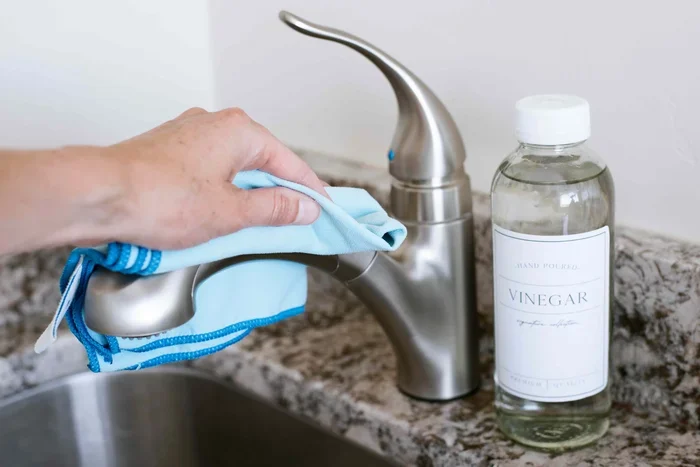
White distilled vinegar is the most popular and effective household item for removing limescale. Its acetic acid content breaks down mineral deposits quickly and safely. You can use it full strength or dilute it with water depending on how bad the buildup is.
Most people already have vinegar in their kitchen for cooking, so it is a very affordable option. You can soak the entire faucet or just the removable parts. For tough spots, undiluted white vinegar works best. For lighter cleaning, a 50/50 mix of vinegar and water is plenty.
Baking Soda for Extra Scrubbing Power
Baking soda is a gentle abrasive that helps scrub away limescale without scratching your faucet. When you combine it with vinegar, you get a fizzing reaction that loosens stubborn mineral deposits. This combination is one of the most effective household descaling solutions you can use.
You can make a paste by mixing baking soda with a small amount of water. Apply it to the affected areas and let it sit for 10 to 15 minutes. Then scrub gently with a soft cloth or old toothbrush. The mild abrasion helps lift the white residue on faucet without damaging the finish.
Lemon Juice and Citric Acid
If you do not like the smell of vinegar, lemon juice is a great alternative. It contains natural citric acid that dissolves mineral buildup effectively. You can squeeze fresh lemon juice directly onto the affected areas or use bottled lemon juice for convenience.
Citric acid powder is another excellent option. You can dissolve a tablespoon of citric acid in warm water and use it to soak faucet parts. Both lemon juice and citric acid are natural, safe, and leave a fresh scent behind. They are perfect for people who prefer a chemical-free descaling approach.
Other Helpful Household Items
A few other common items can help with limescale removal and keeping your faucet clean:
- Salt — adds gentle abrasion when mixed with vinegar or lemon juice for scrubbing tough spots.
- Dish soap — helps cut through grease and grime that can mix with mineral deposits on the faucet surface.
- Old toothbrush — perfect for reaching small crevices and the aerator where buildup tends to hide.
- Soft microfiber cloth — safe for polishing the faucet without scratching the surface.
- Rubber band or bag — useful for wrapping around the faucet to hold vinegar-soaked cloths in place while soaking.
Step-by-Step Guide to Descale Your Kitchen Faucet
Step 1: Gather Your Supplies
Before you start, make sure you have everything you need within reach. Here is a simple checklist:
- White distilled vinegar (or lemon juice / citric acid solution)
- Baking soda
- A bowl or plastic bag large enough to fit the faucet head
- An old toothbrush or soft-bristle brush
- A soft microfiber cloth
- Warm water
- Dish soap (optional)
Having everything ready before you start makes the whole process faster and more enjoyable. You do not want to stop halfway through because you are missing a key supply.
Step 2: Remove the Faucet Aerator
The aerator is the small screen at the tip of your faucet. It is where a lot of mineral buildup collects and where low water pressure often starts. Removing it gives you direct access to clean the inside parts thoroughly.
Most aerators twist off by hand. If it is stuck, try wrapping a rubber band around it for better grip. Place the aerator in a bowl of vinegar and let it soak for at least 30 minutes. For heavy buildup, you can soak it overnight.
Step 3: Soak the Faucet Head
Fill a plastic bag with white vinegar and secure it around the faucet head using a rubber band or twist tie. Make sure the vinegar covers the areas with the most buildup. Let it soak for 30 minutes to one hour.
The vinegar will work to dissolve the calcium deposits and mineral buildup on the surface. For very stubborn limescale, you can leave the bag on overnight. The longer the soak, the easier the cleaning will be.
Step 4: Scrub Away Remaining Deposits
After soaking, remove the bag and pour some baking soda onto a damp cloth or directly onto the faucet. Use your old toothbrush to scrub in gentle circular motions. Focus on areas with the heaviest hard water stains and white residue on faucet.
The combination of the vinegar soak and baking soda scrub is very effective. The vinegar loosens the mineral deposits, and the baking soda helps lift them off the surface. For tight spots around the base of the faucet, the toothbrush is your best tool.
Step 5: Rinse and Polish
Rinse the faucet thoroughly with warm water. Make sure all the vinegar and baking soda residue is washed away. Then use a clean microfiber cloth to dry and polish the faucet.
Drying the faucet after cleaning is an important step that many people skip. When water evaporates, it leaves behind new mineral deposits. By wiping the faucet dry after each use, you significantly slow down the buildup process. This simple habit is one of the best faucet maintenance tips you can follow.
Step 6: Clean the Aerator and Reattach
Take the aerator out of the vinegar and rinse it under running water. Use your toothbrush to scrub away any remaining deposits from the mesh screen. If the aerator is still clogged, you can soak it in a fresh vinegar solution for another 30 minutes.
Once clean, reattach the aerator by twisting it back onto the faucet. Turn on the water and check the flow. You should notice a significant improvement in water pressure and a cleaner stream. If the buildup was severe, you might need to repeat the process once more for the best results.
How to Prevent Mineral Buildup on Your Kitchen Faucet
Wipe Down Your Faucet After Each Use
The single easiest way to prevent limescale is to wipe your faucet dry after every use. A quick pass with a microfiber cloth after washing dishes or filling a pot removes water before it has a chance to evaporate and leave minerals behind.
This habit takes only a few seconds but makes a huge difference over time. Think of it as a faucet cleaning routine that keeps your kitchen looking fresh without any extra effort.
Install a Water Softener or Filter
If you live in a hard water area, consider installing a water softener or a faucet-mounted filter. A water softener removes excess minerals from your home’s water supply before it reaches your faucets and fixtures.
A faucet filter is a more affordable option that attaches directly to your tap. It reduces the amount of calcium and magnesium in the water that touches your faucet. Both options can extend the life of your plumbing fixtures and reduce how often you need to how to descale a kitchen faucet.
Use a Weekly Vinegar Rinse
Even with regular wiping, some mineral buildup is inevitable. A quick weekly rinse with vinegar can keep things under control. Simply spray or wipe undiluted vinegar on your faucet, wait five minutes, and rinse with water.
This simple weekly habit prevents heavy buildup from forming in the first place. It is much easier to maintain a clean faucet than to deal with thick limescale later on.
Common Mistakes People Make When Descaling a Faucet
Using Harsh Chemical Cleaners
Many people reach for harsh chemical cleaners when they see limescale. These products can damage the finish on your faucet, especially if it has a brushed nickel, chrome, or matte coating. The strong chemicals can cause discoloration, pitting, or peeling over time.
Household items like vinegar and baking soda are much safer for your faucet and your family. They are effective enough to handle most limescale without the risk of damage. Stick with gentle, natural cleaners whenever possible.
Skipping the Soak Step
Some people try to scrub limescale without letting the vinegar soak first. This approach takes much more effort and often does not work as well. The soak step is what actually dissolves the mineral deposits so they are easy to remove.
Always give the vinegar time to work. A 30-minute soak is usually enough for light buildup, while heavy deposits may need an hour or more. Patience makes the whole process much easier and more effective.
Using Abrasive Scrubbers
Steel wool, harsh scouring pads, and abrasive sponges can scratch your faucet and ruin its finish. Once the surface is scratched, it becomes even easier for minerals to stick and build up, making the problem worse over time.
Always use a soft cloth, microfiber towel, or old toothbrush for scrubbing. These tools are gentle enough to clean effectively without damaging the surface of your faucet.
Forgetting to Clean the Aerator Regularly
The aerator is one of the most overlooked parts of a kitchen faucet. It catches a lot of mineral buildup and debris, which can seriously reduce water flow if not cleaned regularly. Many people clean the visible parts of the faucet but forget about the aerator entirely.
Make it a habit to check and clean your aerator every month or two. A quick soak in vinegar and a gentle scrub can keep water flowing freely and prevent bigger plumbing issues down the road.
When to Call a Professional for Faucet Descaling
Most of the time, you can handle limescale removal on your own using household items. However, there are situations where calling a professional makes sense. If you have tried multiple descaling methods and the buildup is still severe, a plumber can help.
Also, if you notice leaks, dripping, or damage to internal faucet parts, it is best to call an expert. Heavy mineral buildup can sometimes damage internal seals and valves in ways that require professional repair. A licensed plumber can assess the full condition of your faucet and recommend the right solution.
Regular kitchen plumbing maintenance with a professional once a year can also catch problems early. They can identify areas of heavy mineral buildup and address them before they become costly repairs. Think of it as a tune-up for your kitchen water system.
Comparison: Household Descaling Methods
Not all descaling methods are the same. Here is a quick comparison of the most popular household options for how to descale a kitchen faucet:
- White vinegar — Most effective and affordable. Works well on moderate to heavy buildup. Soak time: 30-60 minutes.
- Vinegar and baking soda combo — Great for tough deposits. The fizzing action helps lift stubborn limescale. Soak time: 15-30 minutes.
- Lemon juice — Natural and pleasant-smelling. Best for light to moderate buildup. Soak time: 30-45 minutes.
- Citric acid — Very effective and chemical-free. Works well for soaking removable parts. Soak time: 20-30 minutes.
- Commercial descaling products — Fast-acting but often contain harsh chemicals. Best for severe buildup that household items cannot handle.
For most households, white vinegar and baking soda are the go-to choice. They are safe, effective, inexpensive, and easy to find. You really cannot go wrong with these two items for regular faucet cleaning and limescale removal.
Quick Tips for the Best Results
- Always use white distilled vinegar for descaling, not apple cider vinegar. The higher acid content works better on mineral deposits.
- Never use vinegar on marble or natural stone faucets, as the acid can damage the surface.
- For best results, descale your faucet every two to four weeks as part of a regular faucet maintenance routine.
- If your faucet has a removable spray head, take it off and soak it separately for a more thorough clean.
- Keep a small spray bottle of vinegar in your kitchen for quick weekly wipes and maintenance.
- After descaling, apply a thin layer of car wax to chrome faucets to help protect the surface from future buildup.
- Use a toothbrush that is no longer in use — it is the perfect tool for reaching tight spots around the base and spout.
Key Takeaways
- White vinegar and baking soda are the most effective household items for limescale removal on kitchen faucets.
- Regular descaling every 2-4 weeks prevents heavy mineral buildup and keeps water flowing smoothly.
- Soaking removable parts in vinegar is the easiest and most thorough way to dissolve calcium deposits.
- Lemon juice and citric acid are great alternatives if you prefer a natural, chemical-free approach.
- Prevention tips like wiping the faucet dry after each use can significantly reduce hard water stains.
- Low water pressure is often a sign of mineral buildup that can be fixed with simple household descaling.
- Knowing when to call a professional saves time when buildup is too severe for DIY methods.
Frequently Asked Questions
Can I use apple cider vinegar to descale my kitchen faucet?
It is best to use white distilled vinegar for descaling because it has a higher concentration of acetic acid. Apple cider vinegar works too, but it is less effective and can leave a slight residue on your faucet due to its other natural compounds.
How often should I descale my kitchen faucet?
You should descale your kitchen faucet every two to four weeks if you have hard water. For areas with softer water, once a month or even every six weeks is usually enough. Regular cleaning prevents heavy buildup and keeps your faucet looking great.
Is vinegar safe for all faucet finishes?
Vinegar is safe for most common faucet finishes like chrome, stainless steel, and brushed nickel. However, you should avoid using vinegar on natural stone, marble, or gold-plated faucets because the acid can damage those surfaces. Always check your faucet manufacturer’s care instructions first.
How long should I soak the faucet in vinegar?
For light to moderate buildup, a 30-minute soak is usually sufficient. For heavy limescale and mineral deposits, you can soak for one to two hours or even overnight. The longer the soak, the easier it will be to scrub away the remaining buildup.
Can I use citric acid instead of vinegar for descaling?
Yes, citric acid is an excellent alternative to vinegar. It dissolves mineral deposits just as effectively and is completely natural. You can buy citric acid powder at most grocery stores or online. Simply dissolve a tablespoon in warm water and use it the same way you would use vinegar.
What causes white residue on my kitchen faucet?
White residue on your kitchen faucet is caused by hard water minerals, mainly calcium and magnesium, that are left behind when water evaporates. This is commonly known as limescale or hard water stains. It is completely harmless but can be unsightly and can affect water flow if it builds up over time.
Conclusion
How to descale a kitchen faucet is a simple task that anyone can do with common household items. You do not need expensive products or professional help to remove limescale and restore your faucet’s shine. White vinegar, baking soda, lemon juice, and citric acid are all effective, affordable, and safe options for tackling mineral buildup.
By following the step-by-step process in this guide, you can clean your faucet thoroughly and keep it looking great for months to come. Regular maintenance, like wiping the faucet dry and doing a weekly vinegar rinse, goes a long way in preventing heavy buildup. These small habits save you time and effort in the long run.
Remember that kitchen plumbing maintenance is not just about aesthetics. Keeping your faucet and aerator clean helps maintain proper water pressure and extends the life of your fixtures. A little care and attention now can prevent costly repairs later.
Start today by grabbing some vinegar and baking soda from your kitchen. Your faucet will thank you with a sparkling clean finish and smooth, strong water flow. Happy descaling!